|
|
 |
 |
 |
 |
 |
 |
 |
 |
 |
| Tue., June 9, 2026 |
 |
| Moon Phase: Last Quarter |
|
Next Full: June 29 Next New: June 14 Sunrise: 5:25 a.m. Sunset: 8:25 p.m. |
| More Info |
| Ready, Set, Catch! Flounder Fishing at Sandy Hook By Mark Marquez II Originally Posted 3/21/08 |
||
|
Some fishing seasons open but take a moment to get going. Striped bass season, for example. All Jersey waters open to striper fishing in early March, but the stripers might not open their mouths yet. Too cold. But the opening of flounder season is different. The season currently starts in late March, and in years past was never closed. The fishing toward the end of March could be alright. But you never know, said Capt. Bob Morrell Jr. from Sandy Hook Fishing Adventures from the Highlands. Just days before this year’s opening on March 23, he was cautiously optimistic that the bottom huggers would immediately bite, and he definitely expected to find out. This winter was mild, and water temps were creeping up. Fyke netters were already pulling in lots of the flatties. In Bob’s area—the Sandy Hook estuary—the fish will probably first be caught best in the Shrewsbury and Navesink rivers, where most of the local flatbacks wintered. He’ll likely target those waters first. As the season wears on, the blackbacks will pour into Sandy Hook Bay and Raritan Bay, and Bob’s charters will follow them. |
|
Flounder will spawn in the back waters in late winter and early spring, and after they do, they’ll start migrating. Water in the 50s is ideal for the fishing, and waters during the opening of the season will probably range in the 40s. Where to find the fish? Bob targets the traditional spots where he’s hooked up through the years, and where his father, uncles and friends connected in the past. But the overall plan is to hit the rivers first and then follow the fish to the bays. His charters might also hunt flounder when the fish move to the ocean close to shore. But that depends on demand, and many anglers request striped bass charters by then.
But there are some keys to the fishing. Chum, chum and chum can be the three most important. Every flounder fisher knows that chumming is not an option but a requirement. The fish are probably drawn in by chumming like no other. Capt. Bob chums two ways. He drops chum pots to the bottom that are filled with a homemade concoction of chicken-flavored canned dog food, ground clams, bunker oil and bits of stuff like rabbit food pellets, cooked rice, corn or dry dog food. The concoction is mixed up, poured into plastic quart containers, frozen and then used on fishing trips, placed in the chum pot and sent down to the bottom. Or Capt. Bob sometimes simply crushes clams or mussels and stuffs them into the pot. Flounder are curious creatures that seek stirred up, disturbed bottom, looking for a meal. At the same time, while on charters, Capt. Bob and crew will periodically toss out scoops of dry chum made from anything like cooked rice, corn, dry dog food or rabbit food pellets soaked in bunker oil, Smelly Jelly or another fishing scent. He double-anchors fore and aft to keep the chum slick in one spot in relation to the boat or to avoid swinging. His anglers might also bounce the sinkers on their rigs on the bottom. The puffs of mud from the sinkers also make a flounder's ears perk up. Well, if they had ears. He also paints the sinkers white or yellow. Again, curious fish. They’ll check it out. Capt. Bob favors flounder rigs with Chesterton hooks with either yellow beads or small, curly tailed, rubber grubs. That’s a curious thing, because others will swear by English-style flounder hooks, and some will say the yellow beads turn off the fish, and so on. Personal preference. Light-action Ugly Stick rods are used for this fishing on Capt. Bob’s boat. But light rods with a sensitive tip, like Ugly Sticks, are the point. Flounder often come up and nibble the bait a few times before getting hooked. Plus, a 3-pound flounder is a hefty one. Not a big fish that slams the bait. Seventy-five percent of catching them is feel, like with most fishing, Capt. Bob said. But his customers seem to have no problem getting the hang of it. They learn to let the fish take the bait a moment. He prefers conventional reels, because he likes to leave the reel in free spool with a thumb on the spool to control the line when fishing. Not that dead-sticking doesn’t work, he said, but he’s not a big fan. For bait Capt. Bob likes bits of sandworms, bloodworms and mussels. Other anglers use clams, but he prefers mussels. One of the baits per hook is used most of the time on his boat, though some people use a combo. Two hours before and after the tides, when the current is running but not too strongly, are his favorite times to flounder fish. This can be especially important in the rivers that can flow strongly, making fishing difficult. Striped bass can also be caught on the same grounds at this time of year. When stripers are running, or if a charter catches a couple, Capt. Bob usually puts out a couple of larger striper rods with big hunks of clam for bait. Catching a 10- or 15-pound striper on a flounder rod is a challenge. Likewise when his anglers start striper fishing in spring, he’ll often fish a couple of flounder rods. The flounder are a little challenging to catch and are one of the tastiest fish anywhere. They also jam-pack Sandy Hook waters, one of the best places in the country to fish for them. The season is brief, lasting only about a month after the opening. But with any luck, the bite will be on from the get-go. So jump right in and take advantage |
||
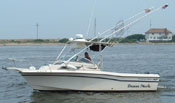
 Finding your own haunts is a matter of trying traditional fish-holding areas like drop-offs, holes and other structure, or scoping out where other boaters are seen fishing, or talking with locals for advice.