|
|

 |
 |
 |
 |
 |
 |
 |
 |
 |
| Mon., June 8, 2026 |
 |
| Moon Phase: Last Quarter |
|
Next Full: June 29 Next New: June 14 Sunrise: 5:26 a.m. Sunset: 8:24 p.m. |
| More Info |
What's in a Name? |
||
|
Think of a giant. Jack and the Beanstalk? David and Goliath? Eli Manning? Ha. Now think of these: Even if you know nothing about those fish, you get a hint. Think about this: Holy smokes. You get a picture? Every year around now, there’s a feeling in the air along the docks on the North Carolina coast, when the fishing boats are suddenly rigged The biggest reels and rods, like Penn 130 outfits, and the
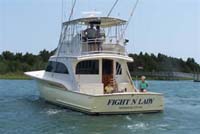
most serious gear, like flying gaffs-- The boat crews are happy-go-lucky, excited, ready. But they’re also serious, almost ominous. Room for fun. No room for mistakes. It’s giant bluefin tuna season along the Tarheel Coast. A dozen years ago, anglers from North Carolina who sailed for king mackerel started getting spooled, said Capt. Shane Brafford from Second to None Charters from Morehead City. |
|
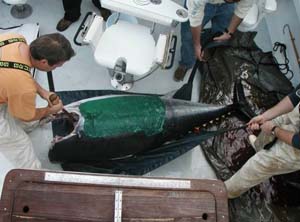
Giant bluefin tuna, fish that can average 250 to 800 pounds, and can weigh up to 1,200, were suddenly discovered swimming along the coast in late fall and early winter. Nobody knows why they arrived and where they came from. But anglers welcomed the fish.
Hook one that’s grown to the size of a Volkswagon, and ... well, you get the picture! “Imagine standing on Trips for giants are the height of all sport fishing. There’s the art of landing the monster. The thoughts triggered by looking at its size. Or the taming of anything giant to begin with. Like when Jack chops down the bean stalk, and the giant comes tumbling. Or when the youthful David sling-shoots a rock to crack the head of the warrior, 6-foot-5 Goliath, beating the Philistines in war. Brains that beat muscles. Second to None Charters fishes for giant bluefin tuna from Thanksgiving to early February, and December and January are the peak.
About 15 of the fish get landed on the boat during the season. At the peak, the trips might hook two or three apiece. Morehead City is the capital of the fishing in North Carolina, only about 5 to 15 miles from the bluefins in the ocean. The fish can move a little up and down the nearby coast, but Morehead is central. For New Jersey anglers, who steam up to 100 miles offshore for big game, the short distance is a bonus. The actual fishing, attracting a bite, is hardly more complicated than any. Four to six ballyhoos, often skirted, are trolled in a spread, some on the surface, some deeper down, covering the water column. Anglers look for temperature breaks, areas where cool and warm waters meet, drawing bait that fish feed on. But the fight--now that’s the art, by far.
But only experience creates the patience and comfort to keep your cool when a small truck is on the other end of the line. Still, no better time to practice. Anglers with Second to None can battle the fish either standing or seated in a fighting chair if they want, if they’re experienced enough. Or they can leave the rod in the gunwale, reeling every time the fish lets up for a moment, letting the tackle do more of the work. The ominous part of the fishing is that there’s nothing safe about a 1,000-pound fish, or even a several-hundred-pound one, connected to you, a couple-hundred-pound angler. You don’t want your pinky caught in the line, let alone anything else, or you might get dragged into the deep with the fish. The battle can have consequences as serious as any in your life. Brains against brawn taken to an extreme. You’ll use all your knowledge about fishing to land a giant bluefin tuna. Listen to that name. A giant. What’s in a name like that? Everything. |
||
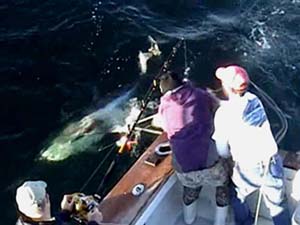 Bluefin tuna, some of angling's fiercest fighters, are already a terror on a line when they’re younger, such as football-sized to 50 pounds.
 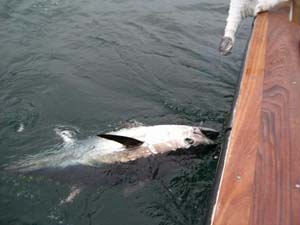 Several stocks of bluefins are believed to exist, and some migrate between here and Maine. Others migrate from here to the Gulf of Mexico, and yet others migrate to the Mediterranean Sea.
 It's easy to give anglers the advice that short, steady pumps of the rod that gradually gain line are the key.