|
|

 |
 |
 |
 |
 |
 |
 |
 |
 |
| Tue., June 9, 2026 |
 |
| Moon Phase: Last Quarter |
|
Next Full: June 29 Next New: June 14 Sunrise: 5:25 a.m. Sunset: 8:25 p.m. |
| More Info |
| The Other Tuna: True Albacore By Capt. Tom Daffin, Fishin' Fever Sportfishing, Brigantine |
|||
|
Nothing gets me more excited than Longfin tuna, or true albacore, show in Many offshore anglers dream about But not me. It’s all about wolfpacks My father and I own and operate the Day in and day out will find us working Being a charter boat captain, I have to I tell our clients to make sure to watch Yellowfins have nothing on the power Don’t be frustrated with longfins. These fish tend to miss baits quite often, but there is something you can do. We fish a lot of artificials in our spreads, such as Green Machines, Zukers and spreader bars. Once on the fish, it’s a good idea to switch things around and run more ballyhoos in the spread, so as to slow your trolling speed. Ballyhoos can be deadly on longfins used in conjunction with spreader bars and teasers. Also, jigging the baits when a pod of fish comes into the spread will get you more bent rods. But not just any rod should be jigged. Say you get a hookup on a short rigger. The bait to jig would be the long rigger behind the bait that was just struck. Or you can jig a short, shotgun bait running alongside the short rigger. |
||
You have to imagine where the pod of fish is located in the spread before you can effectively entice them to eat. Plenty of albacore will also hit on the chunk, or fishing in a chum slick made up of chunks of bait. With Labor Day Weekend, our chunking season begins, and these are overnight trips that usually troll before sundown, chunk from dusk through dawn and then maybe do more trolling the next day before heading home. The late afternoon and early morning troll are great times to fill the box with longfins. But we’ve also caught very well on the chunk, mostly around sundown and sunup. Jigs are deadly on longfins during the chunk. A diamond jig or a butterfly jig fished on a good jigging setup is preferred. If no yellowfins are on the bite in the chunk slick with some daylight showing, there’s no reason to give up, because longfins could show up. I’ve caught longfins while chunking in the bright sun through mid morning. Rule No. 1 in finding longfins is to find the bait.
You can be around no structure and in bad water and still have a banner day. But does this happen often? No. Therefore increase your odds of finding bait by working the waters from 50 to 500 fathoms over humps, sloughs and notches, areas where baitfish will gather in the zone where the tuna can be found. Water quality is also very important. Good, clean water near dirty, green water is about as textbook as you can get. Fishing along the edge in the clean, blue water will allow the fish to see your spread, thus creating strikes. Longfins tend to stick around off the coast later in the year than other tunas. They’re great fighters, often travel in groups that create multiple catches and mayhem, and they taste great. This is truly a good time of year to set your sights on longfin albacore along with other tunas. |
|||
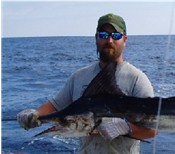
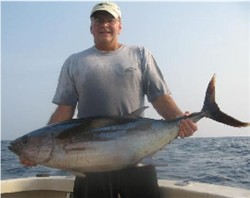
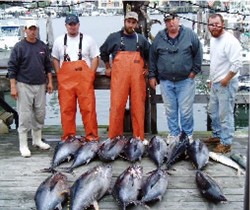 Longfins tend to be a deeper-water fish. Fishing at least 50 fathoms will definitely increase your odds of finding large concentrations of longfin albacore.