|
|
 |
 |
 |
 |
 |
 |
 |
 |
 |
| Mon., June 8, 2026 |
 |
| Moon Phase: Last Quarter |
|
Next Full: June 29 Next New: June 14 Sunrise: 5:26 a.m. Sunset: 8:24 p.m. |
| More Info |
| Rippin' Up Stripers Cape May Style By Capt. Ray Morrison Jaftica Sportfishing, Cape May Originally posted 10/19/07 |
||
|
Lots of anglers might be getting their boats ready for winter by late October. But not us. My crew is busy with one of the best fishing seasons of the year: the fall striped bass run. Schools of the bait will head through the inlets toward open water up and down the Jersey Coast. Large schools of striped bass are right behind them, fleeing the colder waters up north, looking to fatten up for their own track south. Like most gamefish, stripers are looking for an easy meal, so they’ll pick out the weaker or more confused bait. The rips cover numerous shoals and channels at the mouth of the bay, and the depths range anywhere from 2 to 50 feet. Strong tides and currents push water over these shoals, causing upwellings known as rip lines. Many of the waters along the shoals hold stripers, and some big ones. These well-known shoals, such as Prissy Wicks, hold fish. But on any given weekend 100 boats might be fishing that one rip, and the pressure will turn off feeding stripers. So don’t be afraid to move off by yourself and find your own rip line. Look for clean water, because it can make all the difference. Stripers need to see your bait to feed. Upon approaching a rip, watch your depth sounder as you drift over the shoal. |
|
Look for bait and/or stripers at the front, top and back of the shoal. If you locate or catch stripers, do the same drift over again. If a school of stripers is feeding there, you can experience hours of great fishing.
And then on another day I’ve fished with only three boats, and one boat kept running over the fish and turned off a whole school of feeding bass. Striped bass caught in the rips can range in size from schoolies from 6 to 15 pounds to larger, trophy bass from 20 to 40 pounds. Fifty-pound cows are also caught every year, so your tackle should be in good working order. Fresh line is a must, and 14- to 20-pound test will work fine. Be sure to set the drag on your reels, because when you’re catching large bass in the rips, you’ll need it. For tackle our charters use Shimano 3500 bait-runner reels, which have a great drag system, on 6-foot, fast-tapered rods. I like the fast-tapered rods because they have a light tip that allows you to see a bite but also a strong backbone to fight large fish. As far as a rig for striper fishing, it’s basic. We use 3- to 6-foot 30-pound fluorocarbon leaders with a 5/0 Gamakatsu hook. Attach a fish-finder rig to the main line to hold a 2- to 4-ounce sinker, according to depth and tidal current. Live spots or eels are the main baits of choice at the Cape May Rips. If they’re dead, change them, because lively baits are important.
Anglers at the rips also use 1- to 2-ounce bucktails or jigs, and soft plastic lures like Storm shads work very well. Sometimes the water can be a little dirty, and if so, try using a surf clam. It might turn a bad day around. What makes the Cape May Rips a great fishery is also the very thing that makes it some of South Jersey’s most dangerous waters. Know your boating limitations, and don’t get in over your head. Several boats capsize every year while fishing these waters. Watch the weather before you go. It might be blowing 15 to 20 knots, and when winds are with the tide, all is well. But when the tide turns, you could suddenly be in 6- to 8-foot breakers before you know what happened. If you’re not used to the area, talk with other captains who fish there on a regular basis, or book a charter for your first trip. It’ll help you learn more about the area. So for some of the best fishing from late October through December, give striper fishing at the Cape May Rips a try. You never know. You could be the one who catches the next 50-pound trophy. Have a safe trip and good fishing. |
||
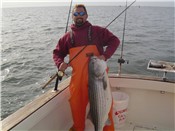
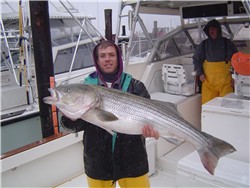 But if you run over them, you could shut off the bite and end what could have been a great trip. Make a wide loop around the area where you just caught fish, and take your time going back over the shoal.
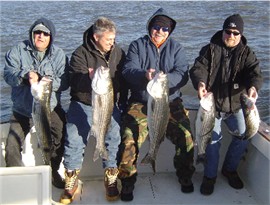 When a striper grabs the bait, don’t pull it away. Bow your rod, and let the fish take the bait, and then set the hook.