|
|

 |
 |
 |
 |
 |
 |
 |
 |
 |
| Tue., Jan. 13, 2026 |
 |
| Moon Phase: Last Quarter |
|
Next Full: Feb. 3 Next New: Jan. 19 Sunrise: 7:18 a.m. Sunset: 4:52 p.m. |
| More Info |
| Wham! Bam! Thank You Clam By Mark Marquez II Posted 10/26/07 No bones about it. Clams are the way to go for Wildwood striper fishing. |
||
|
There’s an air of anticipation along the Jersey Coast come October. Fall fishing is about to bust loose. Funny thing is that some of the slowest fishing of the year comes immediately before. South Jersey’s saltwater anglers at this time are waiting through the lull between summer fishing and the start of the fall migration. But they’ll be rewarded. Especially those who know about one of the best types of fishing in fall: back-bay striped bass fishing. “My father always said people run over fish to get to fish,” Manager Fred Uhlman from No Bones Bait and Tackle in Wildwood said. Local striper anglers in years past predominantly jumped on their boats in the bay, zipped out the inlets, and only targeted the linesiders in the ocean, he said. He used to do it too. Then one day seas kicked up too rough to fish the ocean. He ladled out a broth of bits of clam mixed with saltwater for chum, and tossed out gobs of hooked clam bellies. And he landed striper after striper. People were running over fish to get to fish, he realized. End of story. He was hooked, and still is. |
|
By now, Fred and other anglers have become well aware of these fish, and back-bay chumming with clam bellies for stripers has become the meat and potatoes of fall fishing at No Bones Bait and Tackle. Autumn brings two things: Bigger, migrating stripers that ravish themselves on loads of bait in the bay while on their way south to spend the winter; and the right water temps to make the bay's linesiders aggressive. Before the waters drop to these temps, there's also another issue. Water in the lower 60 degrees is the magic number both to begin the striper migration and chase these pesky bait stealers out of the bay. However, Fred believes that water temp is less important than the length of days for the migration. The amount of sun in the sky because of the time of year seems to trigger the striper migration the most, because after all, water temps are different every year, but the fish arrive at about the same time. Traditionally that time is the third weekend of October. Not this year, though. That weekend passed, and there was no migration. Like many anglers, Fred believes striper season is arriving later and later in recent years. But the fish will come, and that could happen any day. If they do arrive late, maybe that only means a later departure.
Chumming with clams and fishing with clam bellies, the gooey green, black and brown parts of a big surf clam that nobody wants in chowder, is the most effective way to draw in these large stripers, Fred said. That’s why the shop does a considerable business selling 30-pound bags of clam bellies at this time of year. Customers on private boats or on the store’s rental boats fill a container with the clams and saltwater, mostly water. They anchor at a likely spot, namely along one of the many drop-offs along the channels, where baitfish, crabs, shrimp, other food and therefore striped bass gather. They start ladling out the chum, cast a mess of clam belly on a hook, and wait for the stripers to come in. Because they will come in. A striper picks up the scent, starts inching toward the source. It feeds on the small bits of clam in the chum along the way. Suddenly the fish noses up to a bigger hunk of the goo, and wham, sucks it right down. Fish on! The linesider just grabbed the hooked bait. The shop hands out a map to its rental boaters that shows about 15 places that are known hot spots for catching these fish. But likely places are similar to where you’ll find many fish, like near structure or along edges of holes where food gathers. Fred even tells people they’ll find stripers wherever they found flounder in summer. But there are things to keep in mind. The current shouldn’t be too strong. Fast-flowing water will send out the chum too quickly and too far, and will also prevent anglers from tossing baits far enough so that the hooked clam is sitting in the chum slick instead of underneath. The baits should be cast as far as possible for the same reason. Fred doesn’t recommend fishing at the bridges. Bridges are built at the narrowest stretches of water. The current gets bottled up and pushes through the area faster than at other places. Bridges are good for other types of striper fishing, like casting bucktails or lures. But not dunking a clam. All the debris in the bay also concentrates and pushes through the narrows at a bridge. An angler can watch a fishing rod with a clam bend over from debris and grass that gets stuck on the line. Stripers are also lazy and usually avoid a ripping current. The rig is simple: a 6/0, 7/0 or 8/0 hook on a fish-finder rig. Circle hooks are popular these days, but Fred prefers non-circle hooks. He enjoys setting the hook. But if anglers leave the rod in a rod holder, then he recommends a circle hook that’s meant to hook itself in the fish’s mouth without a hook-set. Use the lightest weight possible, a ½-ounce or 1-ounce if there’s no moon current, and a 2 or 3 if there is a moon current. Fred will also avoid fishing two days before the moon or two after because of the strong current. The last two hours of incoming tides and the first two of outgoing seem best. One reason is that the water is cleaner, and that helps the fish find the bait. The stripers can also turn on and off for no apparent reason. Anglers will bail the fish on one trip, and turn around and catch none on the next. The only answer is to keep trying, but maximize your chances by fishing the tried and true ways, and you’ll connect. How big are these stripers? All different sizes. No Bones features aquariums with local fish that visitors like to view. Earlier in the year Fred netted ½-inch fish that he couldn’t identify. By October the fish had grown to 10-inch stripers. Fred and the shop’s owner were fishing one day when Fred nailed a 40-incher, and the owner pinned down a 42-incher. Then Fred hooked into a linesider that ripped off 250 yards of his 20-pound line and kept going, breaking his line off. Ever since then he uses an anchor ball so he can follow a big cow and land it. A 37-pounder is the biggest he caught in the bay so far, and 50-pounders are drilled every once in a while. They’re all different sizes. But some of the biggest show up in fall. As this article went to press, South Jersey was in the middle of a nor’easter lasting several days in the last week of October. These typical fall storms might shut down the fishing for a moment, or at least keep anglers from fishing. But by no means is such weather bad for fall fishing. The storms are the edges of cold fronts that also cool the water, helping to jump start a striper’s instinct that it's time to push off from the summer grounds. A better home behind Wildwood is calling. A telephone call to Fred during the storm for a fishing report could be summed up in one word: anticipation. No migrating fish had arrived before the weather, but the season was on the brink, and this front could be it. You could be sure that a lot of clam chumming was about to go down.
|
||
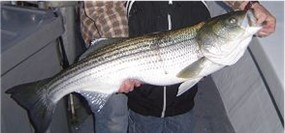 During the peak of the fishing the bay is chock full of bait, holding more forage fish and food like small crabs than anyplace on the coast. That’s why the migrating stripers come into the back waters. Once the water cools to the mid 40s, the baitfish leave, so the bigger fish also move out.
