|
|

 |
 |
 |
 |
 |
 |
 |
 |
 |
| Tue., June 9, 2026 |
 |
| Moon Phase: Last Quarter |
|
Next Full: June 29 Next New: June 14 Sunrise: 5:25 a.m. Sunset: 8:25 p.m. |
| More Info |
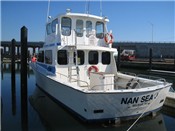
| Monsters of the Deep By Mark Marquez II Based on an interview with Capt. Tom Palchanes, Nan Sea J, Belmar |
||
|
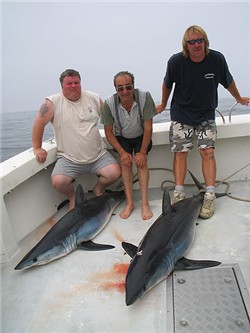
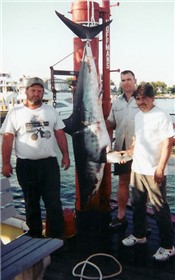
Saltwater anglers’ dreams in June startturn to the deep: to the offshore grounds for big game. Until this time, the ocean’s been too frigid, the weather’s been too dicey, and a run offshore is not only dangerous, but pointless. A cold-blooded, big-game fish would no sooner like to travel to these seas than we would. But things change after Memorial Day. The weather’s warm, sea temps are rising, huge migrations of smaller fish are already swimming through, and big-game anglers, and the offshore fish themselves, are making a move. Shark season’s here. Capt. Tom Palchanes from the Nan Sea J, a Belmar charter boat, loves no fishing season better. The big fish, the violent battles, the mysteries of the environment, and the unexpected consequences of every trip have made him choose shark fishing as one of his specialties. Sharks are the first big game to arrive off Jersey. The late spring’s warming waters and migrating shark forage, predominantly bluefish, are hovering around blue-water structure like holes, canyons, hills, ridges and wrecks. Sharks are soon making a noticeable appearance, or sometimes more like an alarming arrival, according to creatures such as bluefish and even man. Hard for any of us not to notice such a monster swimming past. The Nan Sea J will be setting sail to do battle with makos, blue sharks and other bad attitudes incarnate, including tiger sharks and hammerheads, through June and July. These months trigger warmer water that holds the sharks relatively close to shore, until they follow their comfort zone toward the continental shelf later in the season. The boat’s first shark trips of the season will sail the farthest, heading south for the first wave of higher temps and the sharks that like them. Places like the southern Fingers, a series of dips and ridges that resemble a hand, are a favorite. A well-placed drift of the boat at a place with abundant fish-attracting structure increases the odds of a hook-up. The Nan Sea J arrives, the frozen bunker chum is hung over the side in a milk crate, and the bluefish baits are sent out at various depths. A mako catches a whiff of the slick. Look out. It swims toward the source, darting cautiously from side to side, potential for attack held back like a cat before pouncing. Wham! The shark sucker punches the bluefish bait with a sideswipe. |
|
But no—the beast feels the bait pulling back—the line is coming tight. Well, enough of that, and excuse my daydreams, and here’s the practical stuff. Tom first chooses a likely spot with structure, such as the offshore end of the Mudhole, like at the Glory Hole, and on arrival he searches for clear water. Mako sharks, the sharks most likely to leap, fight, complain, curse and spit, if they could, are the prize. They also taste the best. They like clear water, and green, dirty water doesn’t cut it. Water temps aren’t so much a factor, and structure and location are. Temps need to be warm enough for the sharks to have arrived, and fishing reports, or plain old fishing, will tell you when that has occurred. But 63- to 68-degree water is ideal for makos.
The Nan Sea J’s engines are cut, the boat starts drifting, and the milk crate with the bunker chum is hung in the water. Four rods are set up at all times. One is fished from a Styrofoam shark float at 80- to 90-foot depths, and one at 60, and one at 40. Another is kept close to the boat without a float, even shallower. Fresh bluefish that Tom gets from party boat crews are the baits. The fillets are impaled on a Mustad 7699 hook in size 11/0, a size that works best with the bluefish. The line on the 50-class standup rods includes 15 feet of a bimini twist that helps absorb some of the shock without breaking the mono. A 12-foot wire leader, 240-pound test, comes between the line and the hook to keep the shark’s teeth from biting through. A swivel is attached halfway through the leader, because sharks like to twist and turn, and this helps keep them from getting wrapped up in the wire. That’s it. Go get 'em. |
||