|
|
 |
 |
 |
 |
 |
 |
 |
 |
 |
| Tue., June 9, 2026 |
 |
| Moon Phase: Last Quarter |
|
Next Full: June 29 Next New: June 14 Sunrise: 5:25 a.m. Sunset: 8:25 p.m. |
| More Info |
| PowerPro |
|
Take PowerPro for example. PowerPro is a braided fishing line made from Spectra fiber. Here’s a science lesson made simple. Spectra is a plastic. A very tough plastic. The result is that PowerPro, an odorless, tasteless and nontoxic line, is especially tough. The first generation of superlines, the name given to braided fishing lines, was made from somewhat abrasive material that sometimes cut rod guides, wearing them out. Spectra has taken take care of this problem, PowerPro says. The company also says it uses a special technology to make the line incredibly round, and that helps. The Spectra is made into fibers, and the fibers are braided, and the fishing line is created. Braids are especially popular for targeting bottom fish. Spin fishers sometimes use braid. |
|
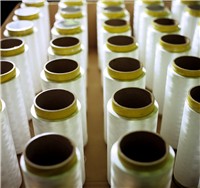 Spools of the raw product. Specra is an especially dense material, so it cannot be permanently died. The color simply encapsulates the line and wears away with time. |
Surf fishing with bait is one instance, because the thin diameter and lack of memory helps cast the bait farther, helps the angler feel the fish bite, cuts through the breaking waves and so on. There can also be disadvantages. |
The strength and thinness of braid also make the line difficult to break, like when the angler needs to break free from a snag. Forget about using your bare hands, and usually the angler wraps the line around something hard, like a dowel. Scissors or a knife are necessary for cutting braid, and not even nail clippers will do. And braid isn’t clear, making some fish shy away from it, though a clear, monofilament leader is often used. But for certain uses, braid is indeed super! The usual clinch knot won’t tie braided line, because the knot will slip, and instead other knots including the uni, Palomar and Albright will work. PowerPro is available in 5- to 250-pound test. Besides the company’s standard braided line used for most fishing, several types of specialty braids are available: PowerPro Ice for ice fishing; Down Rigger Cable Replacement for eliminating electrostatic hum of steel downrigger cables; and Hollow Core for splicing. All the company’s lines come in a choice of Moss Green, Hi-Vis Yellow, White or Phantom Red. For more info, including knots for tying braided line, and where to buy PowerPro, visit the PowerPro web site. |
|
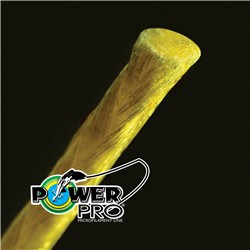 What’s so super about the so-called superlines?
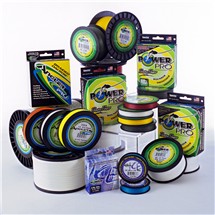 In other words, PowerPro is a superline!
