|
|
 |
 |
 |
 |
 |
 |
 |
 |
 |
| Sun., Jan. 4, 2026 |
 |
| Moon Phase: Full Moon |
|
Next Full: Feb. 3 Next New: Jan. 19 Sunrise: 7:19 a.m. Sunset: 4:43 p.m. |
| More Info |
page 1 of 2 |
||
| Hot Fun in the Summertime By Ann Quicksall, Wildlife Boat Rentals, Dividing Creek |
||
|
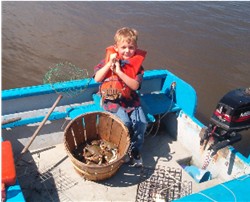
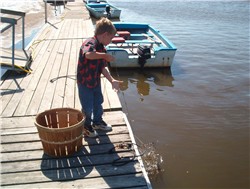
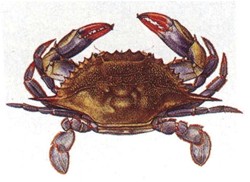
Summer is here, and with the rising temps, our thoughts drift back to childhood pleasures. Running barefoot through the grass, playing in the sprinkler, eating ice cream, and of course crabbing! Crabbing is one of those activities that border on tradition. What better way to spend the day with family or friends? Enjoy a little sun, a little sea, and maybe a friendly competition to catch the biggest and most crabs. Most anyone can go crabbing, even very young children. By age 2 or 3 most kids can pull up a crab trap. However, safety precautions should be taken. So you’ve been looking for a fun, economical day-trip, but don’t know much about crabbing? Wouldn’t know a blueclaw crab if it pinched you? Well, let’s start with the basics. We like to eat these critters boiled or steamed, especially in a spicy concoction. The meat can be picked and used in a variety of recipes, including crab cakes and flounder stuffed with crab. Or they can be fried up just after they molt and shed their hard shells. These are commonly called soft shell crabs. Blueclaws are delicious many ways. These crabs are found in waters ranging from salty to fresh, but seem to prefer brackish water after reaching maturity. They can be caught in tidal creeks and rivers or in shallow, saltwater bays. You can crab from the bank of a creek or from a bridge, pier or small boat. The feisty critters make their home along the country’s entire eastern coast. They can grow up to 8 inches point to point, and 8 1/2 inches is the New Jersey record! They grow quickly, reaching full size within 12 to 18 months after hatching. Beginning around May, the crabs emerge from muddy hideaways on the bottom of deep waters in the bays, where they sheltered through winter, and make their way toward the creeks. |
|
| By August prime-time crabbing season has arrived, and this continues through September and even to October. The crabs start retreating back to the mud when air temperatures hit 50 degrees or lower. August is a great time to crab. The hardshells are running strong, and the kids are getting bored. Let’s face it, once September hits, you’ll be so busy with back-to-school activities or work that you won’t have another chance. Even though the crabs might be all the bigger in September and October, the weather also gets more questionable. |
||
And hey, if you go in August and the fall turns out great, you can go again! First, you want to plan your trip. People always ask me, when is the best time to catch crabs? There’s no definitive answer. Some believe incoming tide is best, and others prefer outgoing. One thing that can be agreed upon is that crab catches slow down at slack tide: dead high or dead low. This only lasts 45 minutes to an hour. |
  |
|
| The only bad time to go crabbing is when the weather’s very windy or the current is running very fast, because of a major rainstorm or possibly other factors like full-moon high tides. These conditions make it very difficult to place your traps correctly, and the crabs may also be pushed by the current. Also, after very heavy rains the salinity in the creeks may lower, and the crabs may retreat to saltier areas for a while. You also never want to be out on the marsh when there’s lightning. You’re probably the highest object in the marsh, a human lightning rod. Another phenomenon is the affect of the full moon. Around the full moon each month, crabs tend to molt and shed their shells. During this time they cease to feed until after the process is complete. Therefore it’s harder to catch crabs. Keep in mind that not all crabs shed at this time, but there definitely seems to be a correlation. A bunch of theories attempt to explain the timing, but there is no exact time, except that crabs molt every 30 days or so. |
||
Most people find the mornings better for crabbing, only because temperatures are cooler. A benefit may also be that the crabs are ready to feed, because it’s been a while since the last batch of crabbers. Some prefer to crab from the shoreline or from a bridge. This is most economical, and you’re close to your vehicle, and some people are leery of boating. It’s also a great option if you’re short on time or prefer to crab late in the day, when most boat rentals are closed. On the downside, such crabbing areas may be very crowded, and some bridges and roadways may be dangerous, and many are off limits. Crabbing on private property or private piers must also be avoided. Boats are another option. If you own your own boat, you can use a boat ramp and be on your way. If not, a number of facilities rent small boats for crabbing and fishing. This is especially a great option for an all-day adventure. You can also reach a larger number of crabbing spots, because crabbing access from land is certainly limited. You can stop the boat many places wherever you please, and pretty much move at will if the crabbing gets slow. Also, it allows you to travel right into the marsh. And, well, riding in the boat is just plain fun. Elderly folks or those who have mobility troubles may find that crabbing from a small boat is more convenient, since you can stay seated a good part of the time. The drawback can be the cost of the rental, and if you forget something, you have to travel farther to retrieve it. |
||
 The upside of the shed is that the crabs are really hungry the week after the full moon, so that’s usually a good time to go crabbing.
